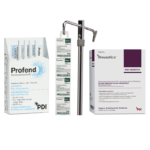
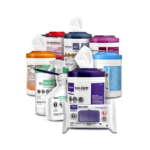
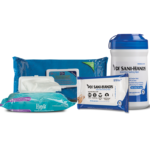
According to the CDC, Catheter-associated bloodstream infections (CABSIs) are among the most serious healthcare-associated risks in the United States. Preventing these infections requires consistent protection—from skin and site antisepsis during line insertion to antimicrobial protection at the catheter site.

PDI has entered into an exclusive commercial collaboration with Johnson & Johnson MedTech to represent BioPatch™ Protective Disk with CHG. Together with PDI’s Prevantics® product portfolio, healthcare teams now have access to an integrated approach to catheter-associated infection prevention supported by extensive clinical evidence.

  • Prevantics® Portfolio – CHG + IPA antisepsis designed to simplify skin antisepsis and support scrub-the-hub compliance.
  • BioPatch Protective Disk with CHG – Continuous antimicrobial protection delivering 360° chlorhexidine coverage around the catheter insertion site.

Through this collaboration, healthcare organizations gain access to coordinated field support, clinical education, and protocol guidance throughout the catheter dwell time—helping clinicians implement best practices to protect patients and reduce infection risk.

October marked the start of the 2025-2026 Influenza season. It’s more important than ever to ensure you are protecting your health and the health of your loved ones with proper infection prevention measures. PDI is invested in providing you with the most up-to-date information as it becomes available. Please continue to visit this page for ongoing updates regarding the status of the Influenza virus!


U.S. Influenza Activity is elevated nationally – Week ending March 14, 20261

  • As of March 14, Influenza activity is elevated nationally but decreasing in most parts of the country.
  • Approximately 12.7% of specimens tested are positive for Influenza. Most viruses are Influenza A  (H3N2) for the season.
  • As of March 14, 3.3% of outpatient visits were for Influenza-Like Illness (ILI) – this is above the national baseline.
  • Fourteen pediatric deaths associated with influenza have been reported this week (total of 115 deaths this season).

Helpful Prevention Tips:

  • Consider getting your influenza vaccination now
  • Ensure that you’re practicing social distancing measures: mask-wearing, hand hygiene, & enhanced cleaning to protect you and your loved ones. This is helpful in COVID-19 and Influenza prevention.
  • CDC has a dedicated website to provide guidance on COVID-19 vaccination and boosters
    • On December 9, 2022, recommended updated (bivalent) COVID-19 boosters for children ages 5 years and older in the United States.
  • CDC has a community level COVID-19 tracker to assist with helping communities and people decide on local prevention step

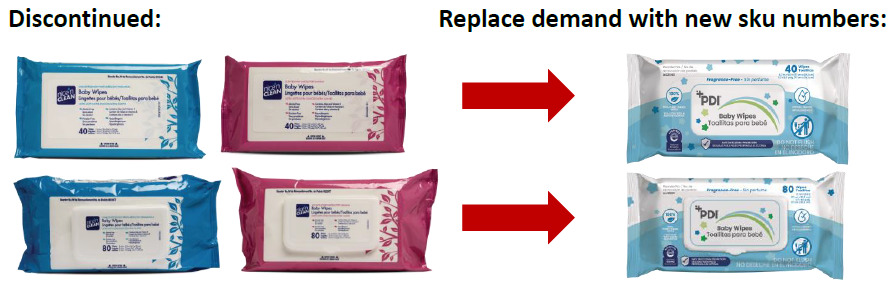
PDI now offers PDI® Fragrance-Free Baby Wipes! Crafted with naturally derived ingredients, our pH-balanced, hypoallergenic baby wipes are clinically proven safe on eczema-prone skin and provide gentle one-step cleansing and moisturizing. Our dermatologist-tested formula can soothe dry skin and reduce redness to help maintain healthy skin.

PDI® Fragrance-Free Baby Wipes are packaged in 80 and 40 count soft packs and will replace the discontinued 80 and 40 count Nice ’n Clean Unscented Baby Wipes (SKU# M233XT, Q70040) and Nice ’n Clean Scented Baby Wipes (M225XT, Q34540).

Please contact your distributor to order M41580 and A62640.


Discontinued:

  • Q70040: Nice ’n Clean Unscented Baby Wipe 40ct
  • Q34540: Nice ’n Clean Scented Baby Wipe 40ct

Replace with:

  • A62640: PDI Fragrance-Free Baby Wipe 40ct

Discontinued:

  • M233XT: Nice ’n Clean Unscented Baby Wipe 80ct
  • M225XT: Nice ’n Clean Scented Baby Wipe 80ct

Replace with:

  • M41580: PDI Fragrance-Free Baby Wipe 80ct

PDI® Fragrance-Free Baby Wipes Specification Information:

Manufacturer Item (SKU)# & Product Name:

  • M41580: PDI Fragrance-Free Baby Wipes 80 Count
  • A62640: PDI Fragrance-Free Baby Wipes 40 Count

Wipe Size:

  • 8.0” x 6.7” (80ct)
  • 8.0” x 6.7” (40 ct)

Packaging UOM

  • 80 wipes per pack/12 packs per case
    40 wipes per pack/12 packs per case

PDI is grateful for your support. If you have any questions, please contact your Territory Sales Manager or our Customer Care Team at 1-800-999-6423.

Authored by SurgiMac LLC

Excerpt:

Proper cleaning and disinfection of the environment protects dental staff as well. Choosing a disinfectant that is compatible with equipment can ensure that the equipment lasts as long as possible while keeping the surfaces disinfected and looking new.

PDI constantly works with equipment manufacturers to encourage testing of our products on their medical devices to ensure compatibility, and even has a compatibility database to make it easier for dentists and other healthcare professionals to verify compatibility. SurgiMac is a dental disinfectant fulfillment partner than can assist  you in obtaining a PDI product that will meet your compatibility needs.

Read Full Article


Woodcliff Lake, New Jersey, February 16, 2024 – PDI Inc. has been awarded a Top Workplaces 2024 honor by NJ.com Top Workplaces. This list is based solely on employee feedback gathered through a third-party survey administered by employee engagement technology partner Energage LLC. The confidential survey uniquely measures the employee experience and its component themes, including employees feeling “Respected & Supported,” “Enabled to Grow,” and “Empowered to Execute,” to name a few.

“We are thrilled to be named a Top Workplace in NJ,” said Sandra Valentin, Senior Director of Human Resources for PDI. “This achievement is a testament to the dedication, hard work, and positive energy our associates bring every day. We have something very special at PDI–a commitment to excellence, collaboration, and an inclusive workplace culture that has made our organization a truly remarkable place to work and develop. We are committed to ensuring PDI remains a place where our associates and customers feel valued, supported, and inspired.”

“Earning a Top Workplaces award is a badge of honor for companies, especially because it comes authentically from their employees,” said Eric Rubino, Energage CEO. “That’s something to be proud of. In today’s market, leaders must ensure they’re allowing employees to have a voice and be heard. That’s paramount. Top Workplaces do this, and it pays dividends.”

Founded in 1977, PDI has a strong heritage of innovation and commitment to partners, sustainability, and the community. PDI spearheaded the development of many of the industry’s most important infection prevention solutions, including the first alcohol prep pad and germicidal disposable wipe.

PDI’s trusted portfolio of products are used daily with patients, restaurant and hospitality customers and staff. That’s why PDI has the #1 disinfectant wipe in healthcare , the #1 hand wipe in healthcare1 as well as the #1 brand, Sani Professional, in food service wipes . In 2019, PDI acquired a majority share of Tru-D® Smart UVC, a pioneer in the UVC disinfection industry, and maker of the first UVC robot.

About PDI Inc.
PDI is dedicated to leading the fight against preventable infections in healthcare, foodservice and our communities. Driven by a commitment to research, quality and service, PDI provides innovative products, educational resources, training and support to help prevent infections and save lives. Because of what we do every day, someone’s Mother, Brother, Father, Son, Sister, Aunt, Uncle, Child or Lover won’t get sick, die or suffer.

About Energage
Making the world a better place to work togetherTM. Energage is a purpose-driven company that helps organizations turn employee feedback into useful business intelligence and credible employer recognition through Top Workplaces. Built on 18 years of culture research and the results from 27 million employees surveyed across more than 70,000 organizations, Energage delivers the most accurate competitive benchmark available. With access to a unique combination of patented analytic tools and expert guidance, Energage customers lead the competition with an engaged workforce and an opportunity to gain recognition for their people-first approach to culture. For more information or to nominate your organization, visit energage.com or topworkplaces.com.

PDI Healthcare provides the latest research, top stories, and trending topics in healthcare and surface disinfection news along with information from our Clinical team. PDI is invested in providing you with the most up-to-date information as it becomes available. Please continue to visit this page for ongoing updates.

SHEA/IDSA/APIC Methicillin-resistant Staphylococcus aureus (MRSA) Compendium Update

The Journal of Infection Control and Hospital Epidemiology has published the SHEA/IDSA/APIC Practice Recommendation: Strategies to prevent methicillin-resistant Staphylococcus aureus transmission in acute care hospitals: 2022 Update. The publication provides a concisely formatted resource showcasing the practical recommendations to help facilities prioritize the prevention of MRSA transmission and infection.  As a sign of the times, antimicrobial stewardship has been reclassified from an unresolved issue to an essential practice.  Among the different patient populations included in the update, decolonization protocols are discussed for adult ICU patients to reduce endemic MRSA, with a high quality of evidence to support the recommendation.  In addition to universal protocols being found superior to screening and targeted decolonization protocols in the ICU, an iodophor may be the preferred agent when mupirocin resistance is of concern, or when using an agent that does not require a prescription is logistically favorable.  The update in its entirety can be found at https://www.cambridge.org/core/journals/infection-control-and-hospital-epidemiology/article/sheaidsaapic-practice-recommendation-strategies-to-prevent-methicillinresistant-staphylococcus-aureus-transmission-and-infection-in-acutecare-hospitals-2022-update/5DB835D2E13F7E813A8A2FD7CB8386BD

SHEA/IDSA/APIC Surgical Site Infections (SSI) Compendium Update

The Journal of Infection Control and Hospital Epidemiology has published the SHEA/IDSA/APIC Practice Recommendation: Strategies to prevent surgical site infections in acute care hospitals: 2022 Update.  The intent of the publication is to provide a concisely formatted resource showcasing the practical recommendations to help facilities prioritize their SSI prevention efforts.  One of the practices that has been upgraded from an “additional approach” to an “essential practice” is the use of an anti-staphylococcal agent for cardiothoracic and orthopedic procedures (quality of evidence: high) and to decolonize patients undergoing other surgical procedures at high risk of staphylococcal SSI (quality of evidence: low).  The update also mentions preliminary data to support the use of povidone-iodine (PVP) for nasal decolonization (alongside CHG bathing) prior to surgery, with an added antiseptic benefit (when compared to mupirocin) of no known resistance allowing for routine decolonization with a PVP agent.  The update in its entirety can be found at https://www.cambridge.org/core/journals/infection-control-and-hospital-epidemiology/article/strategies-to-prevent-surgical-site-infections-in-acutecare-hospitals-2022-update/2F824B9ADD6066B29F89C8A2A127A9DC.

APIC Emerging Disease Task Force: Infection Prevention Playbook

The Association for Professionals in Infection Control and Epidemiology’s (APIC) Emerging Diseases Task Force has created Infection Prevention (IP) Playbooks to help prepare for and manage potential infectious disease outbreaks. This is an initiative born out of the confusion experienced by IPs at the beginning of the COVID-19 pandemic; the goal of these Toolbooks is to improve infectious disease outbreak response by streamlining mobilization, manage surges and highlight the role of infection prevention in emergency management. These playbooks are open access, can be downloaded and customized for use and provide recommended practices for the multiple phases of outbreak response.  Content will continue to be updated and can be accessed at the following site: Emerging Infectious Diseases – APIC

WHO Preparedness & Resilience for Emerging Threat (PRET) initiative:

As the COVID-19 pandemic has made its impacts across the globe, many in public health are wondering if we are ready for another such event to occur.  Born out of this concern, the World Health Organization (WHO) has developed the Preparedness and Resilience for Emerging Threats (PRET) initiative.   The concept is to use systems and tools already in place, alongside global collaboration, to effectively respond to various groups of pathogens based on their mode of transmission, while prioritizing equity, inclusivity, and coherence.  For more information regarding this initiative  and what will be coming soon, please reference: https://www.who.int/initiatives/preparedness-and-resilience-for-emerging-threats

ICHE Compendium Updates, 2022:

The Strategies to Prevent Central-Line Associated Bloodstream infections in acute care hospitals was recently updated and published in ICHE as a SHEA/IDSA/APIC practice recommendation. This document, originally published in 2014, has been instrumental in providing best practice guidelines for the prevention of CLABSI in the acute care setting. The 2022 update provides added, removed, and altered “recommendations”, previously referred to as “best practices”, as well as provides additional approaches to be considered in hospital locations/patient populations where CLABSI prevention may not be successful with essential practices.  Summary information regarding the updates to the 2014 document, as well as the guidelines in its entirety can be found here.

The Strategies to prevent ventilator-associated pneumonia, ventilator-associated events, and non-ventilator hospital-acquired pneumonia in acute-care hospitals was recently updated and published in May 2022. The purpose of this document is to provide recommendations in the acute care setting to prevent VAP, VAE and non-ventilator hospital-acquired pneumonia in adults, children, and neonates. Like the CLABSI prevention compendium update, the guidance is sponsored by SHEA/IDSA/APIC. As an IP, one update that caught my eye is the addition of daily toothbrushing and that CHG oral care is not a recommendation. The summary of document updates, as well as the guidelines in its entirety can be found here.

AHRQ Safety Program for MRSA Prevention

As mentioned in one of our previous posts, the Agency for Healthcare Research and Quality (AHRQ) is recruiting surgical services teams to participate in the Safety Program for MRSA Prevention.  This is a free 18 month program with the goal of reducing surgical site infections (SSIs) with a special focus on methicillin-resistant Staphylococcus aureus (MRSA).  This next AHRQ cohort will begin in January 2023 with the recruitment focus around cardiac, neurosurgical and orthopedic procedures.  Participation provides surgical services teams with technical assistance, coaching, webinars, and tools to support and optimize their infection prevention program.  For more information and to apply to the program please visit this website. 

AHRQ: Surveys on Patient Safety Culture (SOPS) Nursing Home Survey:

AHRQ recently released a survey on patient safety culture (SOPS) in nursing homes to allow for internal facility assessment of patient safety performance.  Currently, AHRQ also provides surveys in the following areas: hospitals, medical offices, community pharmacies, and ambulatory surgery centers. The survey is to capture the opinions of nursing home providers and staff regarding patient safety and healthcare quality.  Questions are listed in sections according to topic: “Working in this Nursing Home”, “Communications”, “Your Supervisor”, “Your Nursing Home”, “Overall Ratings”, “Background Questions”, and a “Comments” section.  AHRQ provides a complete toolkit for successfully administering the survey which includes the study form, survey items and composite measures, survey user’s guide, and additional resources such as an action planning tool, data entry, and analysis tool, FAQs, etc.  This toolkit is beneficial for those facilities looking to enhance their patient safety and infection prevention programs. For more information on the survey and supporting toolkit please visit this website.

AHRQ Toolkit for Preventing CLABSI and CAUTI in ICUs:

The Agency for Healthcare Research and Quality (AHRQ) has recently released the new Toolkit for Preventing CLABSI and CAUTI in ICUs. This toolkit offers a blueprint to help reduce rates of CLABSI and CAUTI in ICUs via a culture of safety and evidence-based clinical practice. While ICUs understand how important prevention of infections is to patient safety, they may be indifferent to performance improvement stages to address their issues. AHRQ provides resources to address the various stages: those looking to initially access current best practices to prevent CLABSI and CAUTI, to those in the implementation stage who may need additional guidance throughout implementation, to those units who are struggling with common challenges and need actional solutions to overcome their local barriers.  For more information on this comprehensive guidance please visit this website.

Agency for Healthcare Research and Quality (AHRQ):

AHRQ is currently seeking hospital ICUs and non-ICUs to join a national cohort to look at the impacts of MRSA bacteremia using evidence-based strategies and interventions.  This is a FREE 18-month program, in conjunction with Johns Hopkins Medicine and the University of Chicago, beginning in April 2022.  Expert coaching, online training, tools, and resources to help protect patients and bolster patient safety will be provided.  Additional information and application details are available here.

Please note that while the ICU/non-ICU cohorts are recruiting now, this program includes two additional cohorts recruiting later in the year: the MRSA prevention program in surgical services recruiting in Summer 2022 and the MRSA prevention program in long-term care recruiting in Fall 2022.

CDC’s Project Firstline:

While not a research program, this training collaborative provides invaluable infection prevention education to frontline US healthcare and public health professionals.  The program’s inception was due to the gaps in infection prevention practice highlighted by the COVID-19 pandemic.  This training is available to professionals in a variety of different healthcare settings to empower healthcare workers in building their infection control knowledge.  This program is funded by the American Rescue Plan for FY 2022-26.  For more information click here.

The Success of CUSP at Henry Ford Hospital Hematology-Oncology Unit:

Henry Ford Hospital has been able to reduce CLABSI by 75% in the hematology-oncology unit by implementing AHRQ’s Comprehensive Unit-based Safety Program (CUSP). These really are fairly simple interventions to drive down infections, and most hospitals already have the tools to do this, they just may not have the structure in place.  The utilization of patient safety science, evidence-based practice, and teamwork can go a long way!  Read more here.  For more information about the CUSP, Method click here.

The Tru-D iQ system is the company’s biggest innovation in more than a decade

FOR IMMEDIATE RELEASE

Memphis, TN [March 15, 2023] –

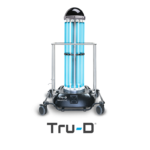
Tru-D® SmartUVC, a PDI Healthcare environment of care solution, has launched the next generation of intelligent UVC disinfection products—its most advanced innovation in fifteen years. A pioneer in the UVC disinfection industry, the Tru-D technology was introduced to the health care industry in 2007 and continues to be a leader in the space. Utilization of UVC disinfection systems grew exponentially during the Covid-19 pandemic and continues to be standard practice in healthcare.

While customers implemented a successful UVC cleaning and disinfection program with the Tru-D Classic device, it was important for this next generation portfolio of products to address health care facilities’ needs for shorter cycle times that do not impact efficacy as well as the ability to implement UVC disinfection in smaller spaces such as bathrooms, physician/ER exam rooms and ambulance modules.

Meet Tru-D iQ: Smart just got Smarter

The Tru-D iQ system of connected products adapts to the needs of a wide range of room sizes to administer a precise dose of UVC. Using Sensor360® technology, Tru-D products provide trusted disinfection of hard, nonporous surfaces with remarkable speed and proven efficacy. The Tru-D family of products is the only “smart” UVC disinfection system with Sensor360® technology that measures the reflected UVC energy that bounces back to the robot, allowing the Tru-D devices to provide a precise, required dose of UVC needed for thorough room disinfection.

The iQ system has three components—Tru-D iQ Tower, Tru-D iQ Scout and Tru-D iQ Controller—that together make for one of the most intelligent systems available and provide a triple threat against unwanted microorganisms including Clostridiodes difficile (C. diff), SARS-CoV-2, influenza A (H1N1), Staphylococcus aureus and Candida auris.

The iQ system lineup

Tower: Tower is the most powerful and intelligent device of the iQ system. It can be used by itself or together with its smaller counterpart, Scout.

Scout: Scout is a compact, maneuverable component of the iQ system that provides effective UVC disinfection. It can be used in conjunction with Tower or by itself for small spaces, such as bathrooms.

Controller: The Controller is the mobile command center for all iQ disinfection devices and connects to the Tru-D SmartHUB, an all-inclusive, web-based application that provides authorized users with the data, tools and resources needed to ensure each facility gets the most out of its enhanced disinfection program with the use of the Tru-D system.

“The demand for UVC disinfection equipment surged during the COVID-19 pandemic, and it became clear very quickly to health care facilities and environmental services (EVS) teams that UVC disinfection is efficacious, safe and only adds minimal time to the cleaning process,” said Chuck Dunn, president of Tru-D SmartUVC.“The iQ system takes smart disinfection to the next level and builds on the outstanding performance of the Tru-D Classic device with a product portfolio that improves cycle times, increases efficacy and enhances safety measures.”

In addition, the iQ system provides one-of-a-kind features for operator ease of use and maximum UVC output including:

  1. A nestled, smaller, second device that, together with its larger counterpart is very easy to transport compared to other interconnected devices.
  2. Tower’s Dynamic Dosing ability to shift UVC output dynamically between sensors to optimize cycle time.
  3. Tower utilizes Flux Acceleration to ensure bulb peak performance by preheating to optimal operating temperature and minimizing bulb startup time.

The science behind iQ

With improved cycle times, Dynamic Dosing capabilities, Flux Acceleration and an auto-deployed bulb array in a sleek, compact design, the iQ system continues the Tru-D SmartUVC tradition and commitment to enhanced, thorough room disinfection. In lab testing, Tower has been shown to consistently provide thorough room disinfection outcomes—with notably faster cycle times than the Tru-D Classic device. Tower achieved a 3.21-4.31 log10 reduction in direct line of sight and shadowed areas of a typical hospital room in as little as five minutes. In an average size restroom, Scout achieved a 4.01-4.31 log10 reduction in direct line of sight and shadowed areas in as little as eight minutes.2

“We are thrilled to bring the next generation of UVC disinfection innovation to market,” said Keyne Monson, Executive Vice President and Chief Commercial Officer, PDI. “Having a good device is important, but we know customers benefit from an integrated, layered approach for cleaning and disinfection. Being able to leverage superior innovation with impactful training and education is why more than 75% of U.S. hospitals trust PDI for surface disinfection.”3

What’s next

The full Tru-D iQ system will be available for a first-ever meet and greet at the AORN Global Surgical Conference & Expo 2023 taking place April 1-4, 2023, in San Antonio, Texas. Learn more at booth #2637.

Tru-D iQ will also take center stage at the Association for Professionals in Infection Control and Epidemiology (APIC) annual conference from Jun 26 – 28, 2023 in Orlando, Florida. Visit booth #1029.

For more information, visit Tru-D.com/iq

About Tru-D® SmartUVC: The Tru-D® portfolio of products is a collection of portable UVC disinfection devices that delivers one automated, measured dose of UVC light to consistently disinfect a room during one cycle. The three new components—Tru-D iQ Tower, Tru-D iQ Scout and the Tru-D iQ Controller—provide quick and efficient UVC disinfection for any space. The iQ system has been shown by independent lab testing to inactivate microorganisms in both direct and shadowed areas in as little as five minutes. For more information, visit https://tru-d.com

About PDI Healthcare: At PDI, we never forget who we are all working for. That’s why we offer a broad range of evidence-based, market led Interventional Care, Environment of Care, and Patient Care solutions, all designed to help reduce preventable infections, control healthcare costs, and ultimately help save lives. It’s all part of our passion to Be The Difference®, every day.

The “Strategies to prevent healthcare-associated infections through hand hygiene: 2022 Update” was recently published in Infection Control & Hospital Epidemiology (ICHE), as the result of a collaboration between SHEA with IDSA, APIC, AHA and Joint Commission and alongside additional organizations that provided expertise in this arena.

Similar to the previously updated compendia, this guidance document provides evidence-based “essential practices” intended for all acute care hospitals to implement and “additional approaches” to be considered in addition to the essential practices when infections are not controlled.

For the complete compendium in publication click here!

PDI Healthcare Vice President of Marketing, Jake Watts was recently interviewed for MarketingSherpa’s “How I Made It in Marketing” story-driven podcast. Hosted by by Daniel Burstein, Senior Director, Content & Marketing, MarketingSherpa and MECLABS Institute, this weekly series features marketing executives who share their most entertaining, compelling, humorous and helpful stories. In this episode, Jake provides insightful lessons on marketing and the workplace.

CLICK HERE to listen!

Medical Design Briefs recently published an article entitled Standard Test Method for Evaluation of Chemical Resistance of Thermoplastics for Non-Disposable Medical Devices– A Voice from Industry Collaboration Through the COVID-19 Pandemic , which discusses how PDI is working with industry leaders Eastman, Solvay, Roehm, and Zebra Technologies, to develop a test method to evaluate thermoplastics used for medical device enclosures.

Excerpt from the article:

In the Spring of 2020, under the aegis of the nonprofit organization HealthCare Surfaces Institute (HSI), engineers and scientists representing different companies across the medical device and healthcare space met to work on the conditioning, exposure, and testing of plastics used for medical device enclosures. The participants formed the Plastic Testing Standards subcommittee for the Healthcare Surfaces Institute Surface Material and Product Certification program. Eastman, Solvay, and Roehm each had participants representing the thermoplastic industry, with Zebra Technologies representing original equipment manufacturers and PDI as the chemical disinfectant manufacturer representative.

Throughout 2020, participants met once a week to discuss current testing standards and to determine whether the standards could be more clearly defined, with the intent to facilitate ease of data comparison. Initially, each company provided feedback into their conditioning, exposure, and testing practices with accompanying justification. The companies chose testing methodology based on strong material science practice, relevancy to equipment manufacturer needs, end customer use cases, and reasonable material testing throughput.


Read the full article here

International Infection Prevention Week, October 16-22, is dedicated to bringing awareness to ways we can all help stop the spread of infection. As an infection prevention-focused company, we want to recognize and thank healthcare workers and those on the frontline, who every day dedicate their lives to the safety of their patients and community.

We invite you to participate in our Infection Prevention online activity! Use clues to find the mystery words hidden in the puzzle for a chance to win a $50.00 Amazon gift card. And after playing, follow the link to learn more about accessing our growing library of continuing education courses. Thank you for everything you do to Be The Difference® every day!

Click here to play now!

Nonwovens Industry recently published an article entitled Industrial and Institutional Wipes Market Rebounds, which discusses how growth patterns normalize following sharp declines in some end-use markets in 2020. As businesses and facilities reopened in 2021, the market began to rebound, and today companies in the wipes industry are reporting similar growth patterns to the pre-pandemic days.

Excerpt from the article:

“Anticipating continued growth in the market is PDI, a major supplier of disinfectant wipes to the healthcare and foodservice sectors. “This idea of cleaning for health is elevated over the idea of cleaning for aesthetics,” says Ramzy Nasrallah, senior director, Downstream Marketing, PDI Healthcare. “Post-Covid, new cleaning and disinfection processes and protocols are being embraced, making wipes more available for everyday use, and as a result I&I sales increased tremendously.”

According to PDI, healthcare environments are increasingly demanding faster and easier access to cleaning and disinfecting surfaces in order to maintain infection prevention protocols. “Facilities have a number of disinfectants and formats to choose from, including sprays, aerosols, dilutable concentrates and wipes,” Nasrallah explains. “Wipes are emerging as the standard for decontaminating low-risk patient equipment and high-touch environmental surfaces within the healthcare space because of their ease of use and reduced exposure to cross-contamination.”

Read the full article