
Interventional Care
We notice that you are visiting us from . This site only services US-based visitors. Would you like to visit the site that is appropriate for your location?
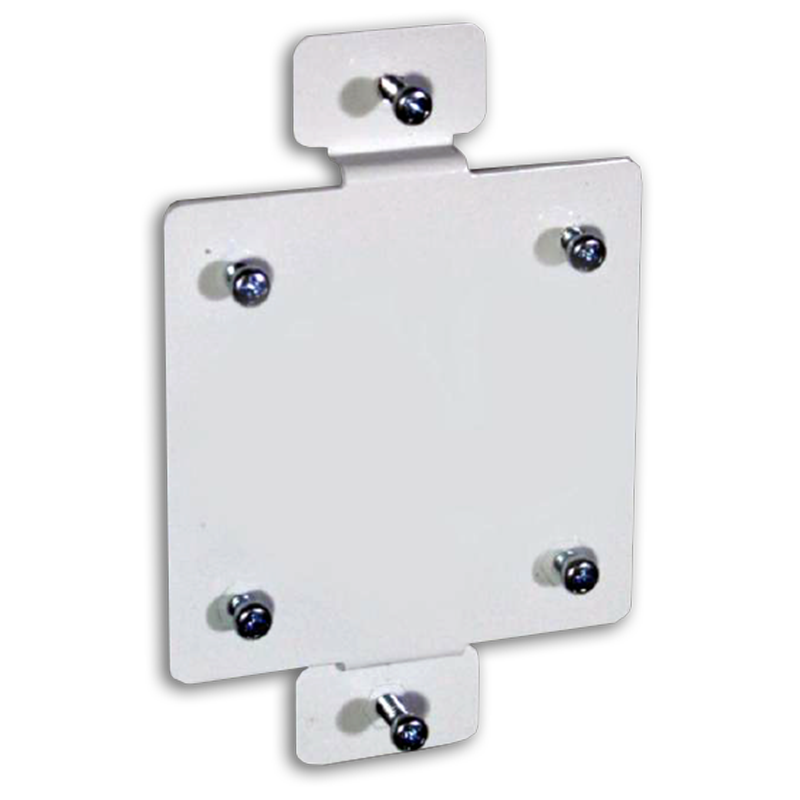
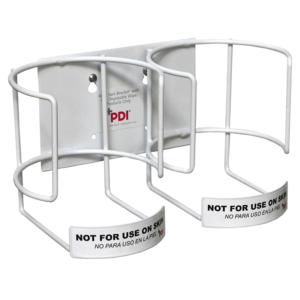
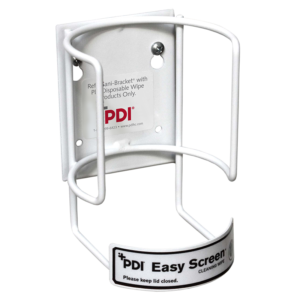
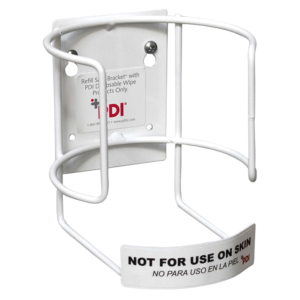
Use to attach Sani-Bracket to certain portable carts. Sani-Brackets sold separately.
SELECT A SIZE
Packaging | 1/case
Dimensions | (W) 3.25" x (H) 5.063" x (D) 0.330"
PDI offers a broad range of evidence-based, market-leading Interventional Care, Environment of Care, and Patient Care solutions, all…
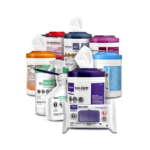
Your Total Environment of Care Solution: From the innovators of germicidal wipes for healthcare, our Environment of Care…
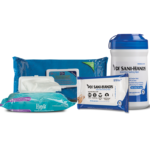
Help your patients and residents remain clean and comfortable with our Patient Care solutions, which includes Sani-Hands®, the…
Can PDI Germicidal Wipes be used on toys?
Yes. PDI’s EPA-registered surface disinfectant products—including Super Sani-Cloth®, Sani-Cloth AF3, Sani-Cloth Bleach, Sani-Cloth Plus, Sani-Cloth Prime, Sani-HP1™, and Sani-HyPerCide® brands—are approved and labeled for use on hard, non-porous toys. They clean and disinfect in a one-step process unless the toy is visibly soiled. After disinfection, toys should always be rinsed thoroughly with potable water (tap water) and allowed to air dry.
This rinse step is not unique to PDI—it is required for all EPA-registered surface disinfectants when used on toys or items that may be mouthed, since disinfectants are not registered as food-contact surface sanitizers. Without the rinse, chemical residues could remain on items that children may put in their mouths.
According to the Association for Professionals in Infection Control and Epidemiology (APIC), recommended best practice is: “Toys should be cleaned/disinfected between patients, especially those that are visibly soiled, mouthed, or used by patients in isolation. Toys should be washed thoroughly; disinfected with a non-toxic, low-level disinfectant; and air dried completely.”
Infection prevention experts also recommend only using washable toys for sharing. Stuffed animals and toys that cannot be cleaned and disinfected should not be shared.
SOURCE: APIC Text of Infection Control and Epidemiology, Chapter 39, p. 14-15, Association for Professionals in Infection Control and Epidemiology, 2011. www.apic.org
Does National Fire Protection Association (NFPA) 30 apply to PDI's surface disinfection and cleaning products?
No. The National Fire Protection Association (NFPA) 30 applies to the storage, handling, and use of flammable and combustible liquids. PDI products such as Sani-HP1™, Sani-HyPerCide® Wipes, Sani-Cloth® Prime, Super Sani-Cloth, Sani-Cloth Plus, Sani-Cloth Bleach, and Easy Screen® Cleaning Wipes are exempt from NFPA 30 requirements.
Although the liquid portion of some of these products may be classified as flammable on the SDS, the wipes themselves are not considered “liquids.” EPA classifies wipes as mixture products containing both solids and liquids, and NFPA has confirmed that wipes are not treated as liquids for the purposes of NFPA 30.
Additionally, NFPA 30 Section 9.1.4(4) specifically excludes “medicines, foodstuffs, cosmetics, and other consumer products that contain more than 50% by volume of water-miscible liquids, with the remainder of the solution not being flammable, where packaged in individual containers not exceeding 5 L (1.3 gallons).”
For these reasons, NFPA 30 does not apply to PDI disinfectant wipes. However, always verify storage requirements with your insurance carrier, as their standards may be more stringent than NFPA guidelines.
Do you have any products effective against SARS-CoV-2 virus (the virus that causes COVID-19)?
Yes. The CDC directs users to EPA List N, which identifies EPA-registered disinfectants that meet the criteria for use against SARS-CoV-2. According to the EPA, products on List N are expected to kill all strains and variants of the virus when used according to label directions.
All PDI surface disinfectant wipes are included on List N and are effective against SARS-CoV-2.
This includes:
For the most current information, you can verify PDI products directly on the EPA List N using the EPA registration numbers found on each product label. [https://www.epa.gov/coronavirus-and-disinfectants/list-n-advanced-search-page-disinfectants-coronavirus-covid-19]
What is contact time and what happens if the surface dries before the stated contact time on a Sani-Cloth® product label?
The contact time listed on the product label is the total amount of time that it takes to inactivate ALL of the microorganisms listed on the product label. This time is typically referred to in minutes, and should be communicated to staff members that are utilizing the disinfectant.
Per EPA guidance, treated surfaces must remain visibly wet for the full stated contact time in order to achieve the efficacy claims on the label. If a surface dries too quickly, additional wipes may be needed to keep the surface wet. The overall contact time itself does not change.
Surfaces may sometimes dry before the stated contact time due to factors such as airflow and ventilation, temperature, humidity, or the material/porosity of the surface. This is not uncommon in healthcare environments, which often have high air exchanges and low relative humidity.
While the EPA requires that treated environmental surfaces remain wet for the full contact time, some leading researchers in infection prevention have offered an alternate view. In a commentary published in Infection Control and Hospital Epidemiology (March 2018, vol. 39, no. 3, pp 229–231), Dr. W.A. Rutala and Dr. D.J. Weber suggested that contact time and treatment time are mutually exclusive, and that treatment time — regardless of visible wetness — may be sufficient for wipes (except bleach products). PDI continues to monitor this research closely and will provide customers with the latest information as regulations permit.
What’s the difference between cleaning, sanitizing, and disinfecting?
Cleaning removes dirt, debris, and some germs from surfaces. It does not kill microorganisms but reduces their numbers by physically removing them.
Sanitizing lowers the number of germs on a surface to a safe level as defined by public health standards. Sanitizers are typically used on food-contact surfaces and must be registered by the EPA for that purpose.
Disinfecting goes a step further by using EPA-registered products to kill a wide range of microorganisms on hard, non-porous surfaces when used according to label directions. Disinfectants are essential in healthcare and other high-risk environments where infection prevention is critical.
PDI’s surface disinfection brand products are EPA-registered disinfectants, designed to kill a broad spectrum of clinically relevant microorganisms, including bacteria, viruses, fungi, and (in the case of sporicidal products) spores. While they can also be used for cleaning, they are not registered as food-contact sanitizers. This means that when used on food-contact surfaces, a potable water rinse is required after disinfection.
Which products are compatible with my equipment?
Our products are designed to be compatible. Extensive work has been performed on materials and equipment to confirm compatibility. For information on Compatible by Design™, our comprehensive program and resources for improving healthcare equipment compatibility, review our “PDI Material Compatibility Reference Guide”, our resources, and use our Equipment Compatibility Tool to learn more!
Please refer to the surface or equipment manufacturer’s guidelines for approved disinfecting instructions and contact your local PDI representative or Customer Care with any additional questions..


Get ready for Sani-HP1, our latest hydrogen peroxide-based disinfectant, designed to tackle harmful pathogens like Norovirus, Candida auris, multi-drug resistant...
NEW! Kills Candida auris & measles

A powerful, ready to use hydrogen peroxide formula designed to address HAI causing microorganisms, including Clostridioides difficile without compromising compatibility.
New Scent Coming Soon
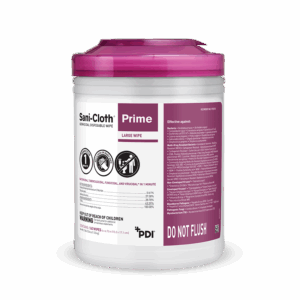
Powered by a next generation formulation, protect your patients, staff, and facility from HAIs in just 1 minute
Kills Candida auris
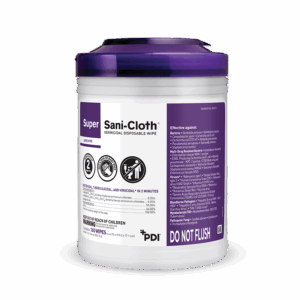
Fast contact time allows for a quick room turnover. Ideal for daily use in fast-paced environments that require short contact…
Kills Candida auris and measles

Ideal for disinfecting high risk areas contaminated with Clostridioides difficile (C. diff.) spores and Norovirus.
Kills C. difficile and measles
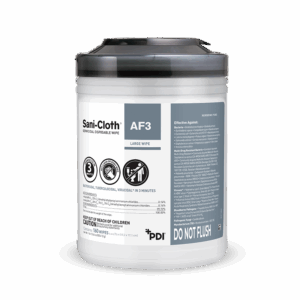
Protecting your staff and patients has never been easier! Alcohol and fragrance free formula is ideal for use around those…
Alcohol Free and Kills TB
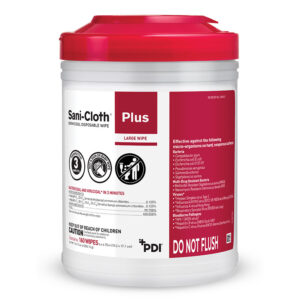
Ideal for use in alternate care settings, including physician and dental offices.
Kills SARS-CoV-2
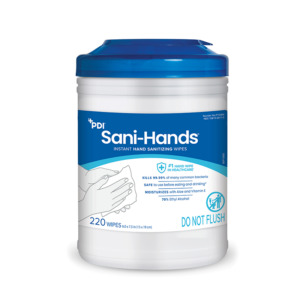
An ideal hand hygiene solution for staff, visitors, patients or residents who cannot get out of bed to clean their…
70% Ethyl Alcohol
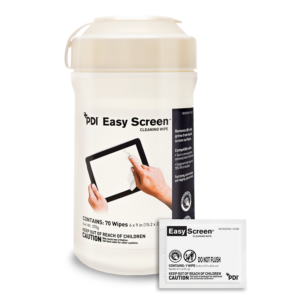
Finally, a compatible 70% IPA touchscreen cleaner that works at the speed of technology.
70% Isopropyl Alcohol
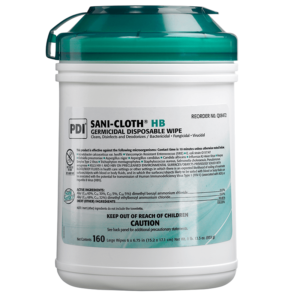
Designed to accommodate the many situations and hard, nonporous environmental surfaces found in healthcare settings.